
Home » What to Expect During Your First Eye Exam in Tennessee
Scheduling your first eye exam with a new doctor in Tennessee is a smart step toward protecting your vision and overall health. Whether you’re updating your prescription or checking on new symptoms, knowing what to expect can make the visit feel comfortable and stress-free. At Tennessee Eye Care, our Optometrists and Ophthalmologists work together to provide comprehensive care for patients across Knoxville, Harriman, Lenoir City, Morristown, and Powell. A full eye exam does much more than measure your eyesight — it also screens for silent but serious eye conditions that can affect long-term vision.
Below is a clear walk-through of the seven key steps you’ll experience during a comprehensive eye exam. With this guide, you’ll know how to prepare, what questions to ask, and how to partner with your provider to get the best recommendations for glasses or contacts.
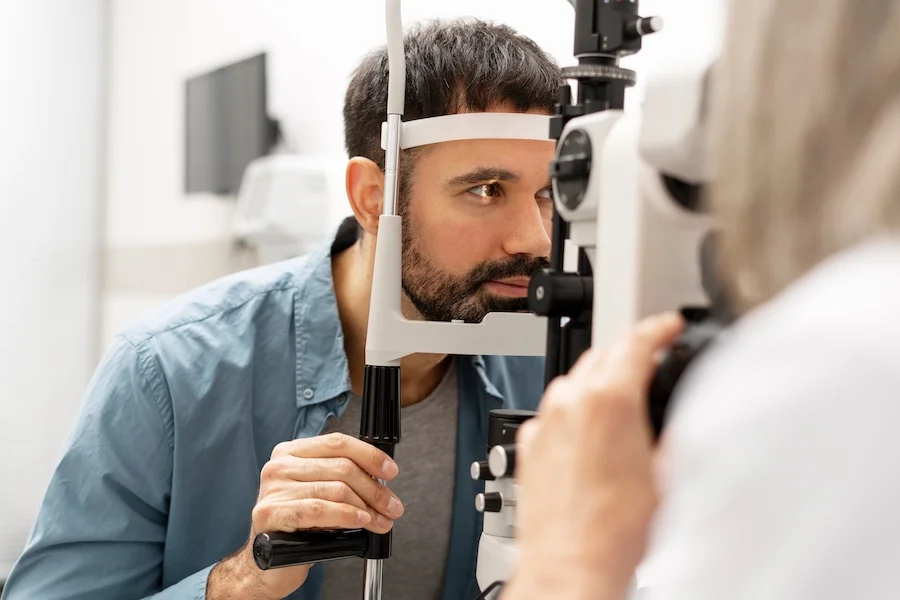
Scheduling your first eye exam with a new doctor in Tennessee is a smart step toward protecting your vision and overall health. Whether you’re updating your prescription or checking on new symptoms, knowing what to expect can make the visit feel comfortable and stress-free. At Tennessee Eye Care, our Optometrists and Ophthalmologists work together to provide comprehensive care for patients across Knoxville, Harriman, Lenoir City, Morristown, and Powell. A full eye exam does much more than measure your eyesight — it also screens for silent but serious eye conditions that can affect long-term vision.
Below is a clear walk-through of the seven key steps you’ll experience during a comprehensive eye exam. With this guide, you’ll know how to prepare, what questions to ask, and how to partner with your provider to get the best recommendations for glasses or contacts.
Your visit begins with a conversation about your overall health. In our Knoxville clinic, this step often reveals important information that helps us detect or prevent vision problems early.
Your doctor will ask about:
These details help your eye doctor in Tennessee understand your unique risk factors and tailor your exam accordingly.
Next, your provider measures how clearly you can see at different distances. You’ll read lines of letters on the Snellen chart to determine your starting visual sharpness, such as 20/20 or 20/40. If you’re over 40, we’ll also check your near vision to see how well your eyes focus up close.
Refraction is the test most patients remember — the familiar “Which is better, one or two?” Using a device called a phoropter, your doctor switches lenses to find the perfect combination for clear, comfortable vision. This step determines your eyeglass prescription and helps us recommend the best glasses for you based on your visual needs and lifestyle.
Glaucoma is often called the “silent thief of sight” because early damage usually occurs without symptoms. That’s why screening is so important.
Your doctor will check your eye pressure through:
High pressure can damage the optic nerve over time, so catching it early is essential.
Dilation is one of the most valuable parts of a comprehensive exam. After administering dilating drops, your pupils widen to give your doctor a full view of the retina, optic nerve, and blood vessels. At TEC, this detailed evaluation helps us detect conditions such as diabetic retinopathy, early glaucoma changes, and signs of macular degeneration — all before symptoms appear.
Once your testing is complete, your eye doctor will explain what they found. You’ll learn about your overall eye health, any concerns to monitor, and next steps for treatment. If you need corrective lenses, your provider will review your new prescription and help you choose between glasses, contacts, or both.
Your ongoing relationship with your eye doctor matters. Partnering with a trusted Tennessee provider ensures continuity of care and quick access to specialized services, including cataract treatment, glaucoma management, retinal care, and laser procedures. Patients across East Tennessee often tell us how much they value having a local, reliable team they can count on.
A comprehensive eye exam in Tennessee is one of the simplest and most effective ways to protect your vision. By walking through these seven steps, you’ll understand your eye health more clearly and feel confident about your personalized care plan. Working with an experienced provider — like the team at Tennessee Eye Care — ensures you get expert guidance, supportive care, and the best options for glasses or contacts suited to your everyday life. Contact us today!