
“If my vision seems fine, do I really need an eye exam?” It’s one of the most common questions eye doctors hear. It makes sense: if you can read road signs and your phone without trouble, an eye appointment can feel optional.
But seeing clearly is only one part of eye health. Many of the conditions that threaten vision develop quietly, and an eye exam is often the only way to catch them before they cause damage.
The Short Answer
Yes, you still need regular eye exams even if your vision seems fine. Conditions like glaucoma, diabetic retinopathy and some retinal problems often cause no pain or noticeable vision change in their early stages. A comprehensive eye exam checks the health of your eyes, not just how well you read the chart, so problems can be found while treatment is most likely to protect your sight.
Why Get an Eye Exam When You Can See Clearly?
Many eye diseases have no early symptoms
Several common eye conditions are “silent” at first:
- Glaucoma damages the optic nerve gradually, usually starting with side (peripheral) vision. Most people don’t notice a change until the damage is significant, and lost vision can’t be restored. Learn more about the symptoms of glaucoma.
- Diabetic eye disease can affect the blood vessels in the retina for some time before vision changes. That’s why people with diabetes need regular dilated eye exams even when they see well.
- Macular degeneration can begin with subtle changes in the retina that an eye doctor can see before you notice them.
- Retinal changes such as small tears or thinning areas sometimes cause no symptoms and are found during a dilated exam.
- Cataracts develop slowly, and many people adjust to the gradual blur without realizing how much their vision has changed.
Your eyes are a window to your overall health
The back of the eye is the one place a doctor can look directly at blood vessels and nerve tissue without any incision. During an exam, your eye doctor may notice signs linked to conditions such as diabetes, high blood pressure or high cholesterol, and suggest you follow up with your primary care provider. Read more about why eye health is a key indicator of overall health.
Your prescription may have changed
Vision often changes so gradually that you don’t notice. Many people discover at an exam that a small update makes driving at night, reading or computer work noticeably more comfortable. An out-of-date prescription can contribute to eye strain, headaches and squinting.
Eye teaming and comfort issues
Your eyes need to aim and focus together. Problems with eye coordination or focusing can cause headaches, tired eyes, double vision or trouble reading for long periods, even when each eye sees the chart clearly on its own. An exam checks how your eyes work together.
Screen strain and dry eye
Long hours on screens can leave your eyes dry, tired or briefly blurry. An exam can help sort out whether the cause is dry eye, an outdated prescription, focusing strain or something else, and what can help.
Vision Screening vs. Comprehensive Eye Exam
A vision screening, the kind done at school, a pediatrician’s office, a health fair or the DMV, mainly checks how clearly you see at a distance. It’s useful for spotting obvious problems, but passing a screening doesn’t mean your eyes are healthy.
A comprehensive eye exam with an optometrist or ophthalmologist typically includes:
- Medical and vision history, including medications, family history and any symptoms
- Visual acuity testing at distance and near
- Refraction to determine your exact prescription
- Eye muscle and eye teaming tests
- Pupil responses and, when needed, peripheral (side) vision testing
- Eye pressure measurement (tonometry) to help screen for glaucoma
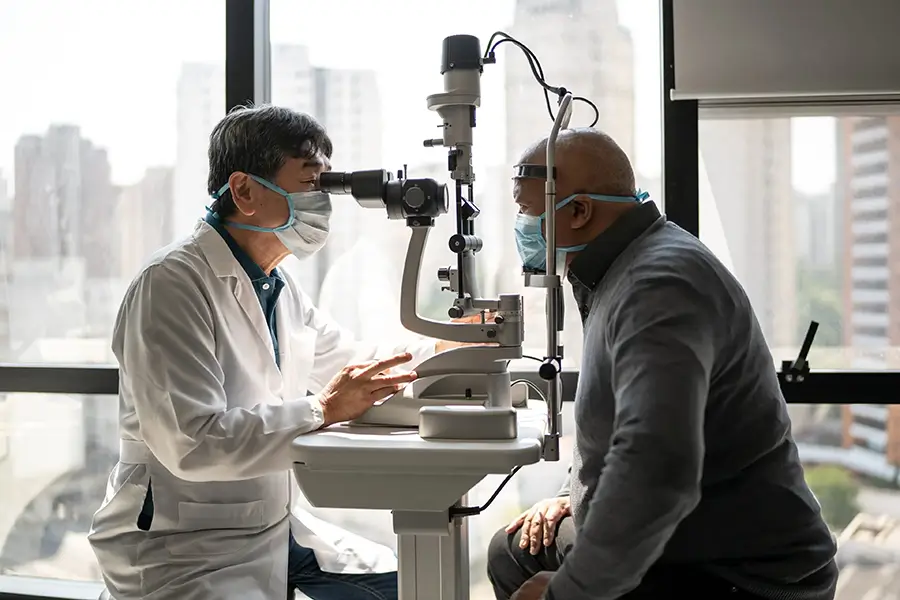
- Slit-lamp examination of the front of the eye, including the cornea, iris and lens
- Dilated exam of the retina, optic nerve and blood vessels at the back of the eye
Not every visit includes every test, and your doctor may add imaging or other tests based on your needs. For a step-by-step walkthrough, see what happens in an eye exam.
How Often Should You Get an Eye Exam?
The right schedule depends on your age, health and risk factors, and professional guidelines differ, particularly for younger adults with healthy eyes. Some recommend an exam every one to two years for all adults; others suggest less frequent exams in your 20s and 30s if you have no symptoms or risk factors. Our eye exams page lists the age-based schedule we follow. In general:
- Adults under 40 with no eye problems: ask your eye doctor what interval makes sense. If you wear glasses or contacts, you’ll need exams often enough to keep your prescription current.
- Adults around 40 and older: this is when age-related changes such as presbyopia (needing help to read up close) and the risk of conditions like glaucoma start to increase, so exams become more frequent.
- Older adults (65 and up): usually every one to two years, or more often if you have cataracts, macular degeneration, glaucoma or other conditions being monitored.
- People with diabetes: usually a dilated eye exam at least once a year, or more often if your doctor finds diabetic changes. Learn about our diabetic eye care.
- Children: a first eye exam in infancy or early childhood, another before starting school, and regular exams through the school years, or as your child’s eye doctor recommends.
You may need more frequent exams if you have a family history of glaucoma or macular degeneration, wear contact lenses, take medications that can affect the eyes, have high blood pressure, or have had eye injuries or surgery.
Signs You Should Come in Sooner
Don’t wait for your next routine exam if you notice:
- Blurry vision at any distance, or trouble seeing at night
- Frequent headaches, eye strain or squinting
- Dry, gritty, itchy or watery eyes that don’t improve
- Seeing halos around lights or glare that makes driving harder
- Difficulty reading or doing close work
- A gradual increase in floaters
- Any change in how your vision looks or feels
When to get urgent or emergency care
Some symptoms need same-day attention. Call an eye doctor right away or go to the emergency room if you have:
- Sudden loss of vision or a sudden blurry or dim area in one or both eyes
- A sudden shower of new floaters, flashes of light, or a curtain or shadow across part of your vision
- Severe eye pain, especially with redness, headache, nausea or halos around lights
- A chemical splash, cut or blow to the eye
- Sudden double vision
These can be signs of conditions such as a retinal detachment or a sudden rise in eye pressure, which are treated most effectively when caught quickly.
Schedule Your Eye Exam in East Tennessee
Even if your vision seems perfectly fine, a regular comprehensive eye exam is one of the simplest ways to protect your sight for the long term. Tennessee Eye Care’s optometrists and ophthalmologists see patients at clinics in Harriman, Knoxville, Lenoir City, Morristown and Powell. Find a location near you and schedule your exam.